
 By
By 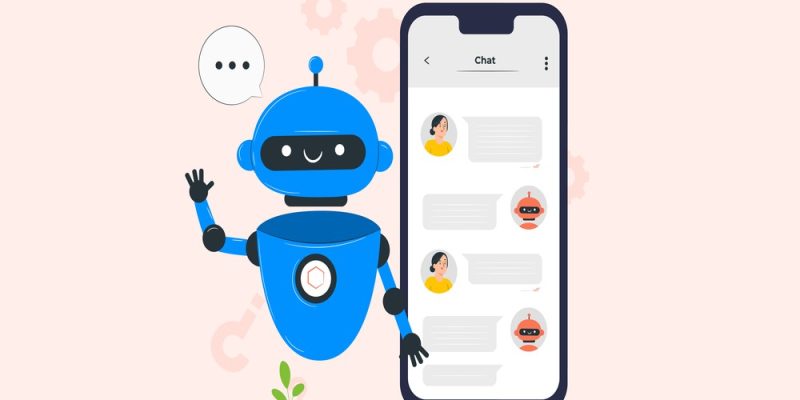
Imagine data as a vast library where every book is written in a language no one speaks fluently. Data science is the librarian who not only deciphers the books but also arranges them so anyone can find meaning in the chaos. In this metaphor, building a chatbot with NLP and LLMs is like training that librarian to hold a conversation with every visitor-anticipating questions, understanding tone, and providing answers with remarkable fluency.
From Scripts to Smart Conversations
Chatbots of the early digital era were like stage actors stuck with a rigid script. They responded only if the audience used the exact lines. If you deviated even slightly, the illusion broke. With natural language processing (NLP) and large language models, these chatbots evolve into improvisational performers-capable of understanding nuance, context, and intent.
Modern LLM-driven bots don’t just respond; they interpret. They can distinguish between “I’m locked out of my account” and “I forgot my password,” tailoring their answers accordingly. This flexibility has made them indispensable in customer service, healthcare triage, and even education.
Building Blocks of NLP-Powered Chatbots
Constructing a chatbot is not about stacking lines of code but weaving together components that emulate human communication.
- Intent Recognition: Like sensing the mood of a conversation, NLP helps the chatbot grasp what the user really wants, even if phrased differently.
- Entity Extraction: The system picks out crucial details-dates, names, or locations-just as our minds spotlight key points in a story.
- Dialogue Management: This is the director behind the curtain, ensuring the conversation flows logically.
- Response Generation: Finally, the chatbot crafts replies, which can range from pre-set templates to dynamic sentences created by LLMs.
Together, these elements create a conversational partner that feels less mechanical and more human.
Large Language Models: The Engine of Understanding
If NLP is the skeleton, large language models are the beating heart. Trained on billions of words, LLMs can capture rhythm, idioms, and contextual meaning much like a novelist who has read every book in the library.
Instead of memorising responses, LLMs predict the next most probable word in a sequence. This predictive power allows them to answer with creativity and precision, offering not just factual answers but also explanations, analogies, and even empathy. For businesses, this means a chatbot that doesn’t just inform-it engages.
Learners diving into a Data Science Course often find LLMs a fascinating study area. They represent the pinnacle of applied machine learning-turning abstract algorithms into conversations that resonate with real people.
Designing for Real-World Applications
A successful chatbot isn’t measured by how futuristic it feels but by how effectively it solves problems. Consider a hospital’s virtual assistant that guides patients through booking appointments. Here, accuracy and clarity outweigh charm. On the other hand, a retail chatbot thrives on personalisation-remembering a user’s previous purchases, recommending products, and even joking lightly to mimic human rapport.
This variety demonstrates the versatility of NLP and LLMs. Developers must tune their models carefully, striking a balance between efficiency and empathy. Too much rigidity frustrates users; too much creativity risks misleading them.
For professionals in technology hubs, enrolling in a Data Science Course in Bangalore often opens doors to such applied projects. Bangalore’s ecosystem, rich with AI-driven start-ups, provides an ideal ground to experiment with conversational AI tools.
The Future of Conversational AI
The horizon of chatbot development is expanding rapidly. Imagine voice-enabled assistants that can negotiate in customer disputes, chatbots trained on medical literature that offer preliminary diagnostics, or learning companions that adapt to a student’s knowledge level. As multimodal LLMs progress, chatbots will no longer be confined to text but will integrate voice, image, and even gesture recognition.
Yet, challenges remain. Bias in training data can skew responses. Security and privacy are constant concerns when chatbots handle sensitive information. These hurdles remind us that the librarian in our metaphor still needs guidance-careful curation, ethical oversight, and human supervision.
Conclusion
Building a chatbot with NLP and LLMs is less about coding lines of dialogue and more about teaching machines the art of conversation. Like a well-trained librarian, these systems don’t just recite-they interpret, empathise, and adapt. For learners and professionals, the journey into chatbot development is both technical and imaginative, blending algorithms with storytelling. In the hands of those equipped with the right training, perhaps through a Data Science Course or practical projects in Bangalore’s tech ecosystem, the future of conversational AI promises to be more natural, more inclusive, and more transformative than ever before.
For more details visit us:
Name: ExcelR – Data Science, Generative AI, Artificial Intelligence Course in Bangalore
Address: Unit No. T-2 4th Floor, Raja Ikon Sy, No.89/1 Munnekolala, Village, Marathahalli – Sarjapur Outer Ring Rd, above Yes Bank, Marathahalli, Bengaluru, Karnataka 560037
Phone: 087929 28623
Email: enquiry@excelr.com





Comments