
 By
By 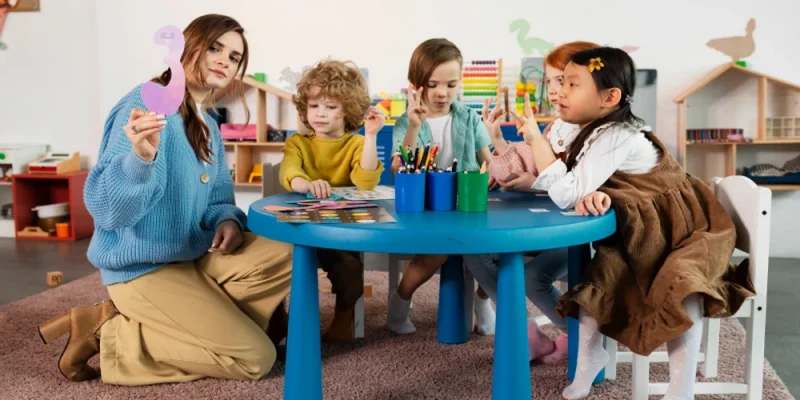
Key Highlights
- Daily routines establish a sense of security and predictability for young learners.
- Transitions between activities foster autonomy and emotional regulation skills.
- Consistent structures enable educators to observe individual learning progress effectively.
- Integration of play and academics in a routine promotes holistic development.
- Quality childcare settings utilise time management to maximise engagement and learning.
Introduction
The structure of a child’s day in an early learning environment is far more than a mere schedule; it is the silent curriculum that dictates the quality of their educational experience. In the bustling landscape of early childhood education, the rhythm of the day plays a pivotal role in fostering cognitive, emotional, and social growth. For parents exploring options for a preschool in Singapore, understanding how these daily routines operate is essential. It is within these consistent patterns that children find the stability needed to explore, experiment, and learn.
The Foundation of Security and Predictability
At the heart of high-quality early childhood education lies the predictability of the daily routine. When children know what to expect, anxiety diminishes, and their capacity to focus on learning tasks increases significantly. A well-planned routine in a childcare in Singapore setting does not imply rigid adherence to the clock but rather a balanced flow of activities. This consistency allows children to internalise the sequence of the day, moving from morning circle time to exploratory play with confidence.
When a preschool in Singapore implements a thoughtful routine, it signals to the child that the environment is safe and organised. This security is the bedrock of learning. A child who feels secure is more likely to take intellectual risks, ask questions, and engage deeply with their peers. This sense of order is particularly important in the early years, where children are learning to navigate their environment and their emotions simultaneously.
Transitions as Learning Opportunities
A crucial aspect of any daily routine involves the transitions between activities. Often overlooked, transitions represent significant opportunities for learning quality to shine through. Whether moving from indoor play to outdoor exploration or settling down for a snack, how these transitions are managed reveals much about the pedagogical approach of the childcare in Singapore provider.
Effective educators view these moments not as interruptions but as teachable instances. They encourage children to clean up, gather their belongings, or move in specific ways, which subtly reinforces organisational skills and physical coordination. In high-quality settings, these moments are characterised by calmness and purpose. By teaching children how to manage these changes, educators help them develop vital life skills, such as self-regulation and resilience, which are foundational for their future academic journey.
Observing Growth Through Consistency
Consistency in the daily schedule provides educators with a reliable baseline for observation. When the routine remains steady, teachers can more easily identify patterns in a child’s behaviour, interests, and developmental milestones. This structured observation is the hallmark of a high-quality preschool in Singapore.
Rather than reacting to chaos, teachers can proactively guide learning. If a routine includes regular blocks of time for collaborative play, the teacher has the opportunity to observe how children negotiate, solve problems, and empathise with one another. These insights allow for tailored support that meets the specific needs of each child, ensuring that no one is left behind and that every child is appropriately challenged.
The Balance of Play and Academic Readiness
The hallmark of superior childcare in Singapore is the seamless integration of play and structured academic readiness. The daily routine should reflect this balance, ensuring that children are not just memorising facts but are actively constructing knowledge through play-based experiences. A well-balanced day includes time for free play, where children lead their discovery, and guided learning sessions, where teachers introduce new concepts.
This oscillation between child-led and teacher-led activities prevents burnout and maintains engagement. It recognises that children learn best when they are active participants. When parents look for a preschool in Singapore, they should look for routines that prioritise this dynamic balance, as it is a strong indicator of a curriculum designed with the developmental needs of the child at the forefront.
Conclusion
Ultimately, the daily routine is a reflection of an institution’s philosophy and its commitment to learning quality. It is the framework upon which meaningful educational experiences are built. By observing the flow, structure, and intentionality of a day, parents can gain profound insights into what a school values. Whether it is through the careful management of transitions or the strategic balance of play and instruction, a purposeful routine creates an environment where children can thrive.
At Raffles Kidz International, we understand that every moment of the day is a chance for a child to learn and grow. We invite you to discover how our structured approach supports your child’s journey. Contact us today to learn more about our programmes and how we can support your child’s early years.




Comments