
 By
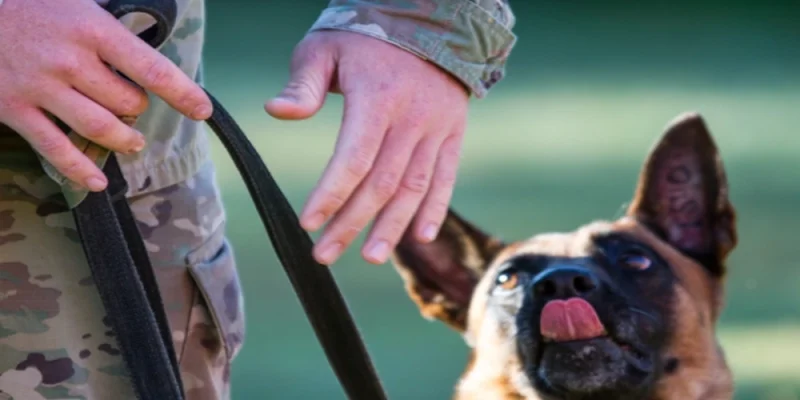
Builders’ yards, scrapyards, warehouses, car dealerships, farms, and construction sites all face the same problem: a large area, valuable equipment, and long stretches of the night when nobody’s around. Cameras and alarms help, but many owners still look at dogs as a deterrent. A trained protection dog patrolling with a handler is something most intruders would rather avoid.
Before buying a dog or signing a contract with a security company, business owners in the UK and US need to understand the rules, the responsibilities, and whether a dog is really the right answer for their site.
The UK: the Guard Dogs Act 1975
In the UK, the use of guard dogs on business premises is governed by the Guard Dogs Act 1975. Section 1 sets out three core rules.
First, a guard dog can’t be used at premises unless a handler capable of controlling it is present, and the dog must be under that handler’s control at all times, except while it’s secured so that it can’t roam freely around the premises.
Second, the handler must keep the dog under control throughout its use, unless another handler has taken over or the dog is secured.
Third, a guard dog can’t be used unless a warning notice that a guard dog is present is clearly displayed at each entrance to the premises.
In practice, that means the old image of a dog left loose overnight in an empty yard isn’t legal in the UK. Either a handler is present and in control, or the dog is secured, for example on a running line or in a kennel run, so it can’t move freely around the site.
Security companies that supply dogs with handlers are also covered by private security licensing. Handlers working on contract generally need a Security Industry Authority licence, and many dog handling firms belong to industry bodies with their own training and welfare standards.
The US: state law and liability
In the US, there’s no single federal law on guard dogs. Rules come from states, counties, and cities, and they vary widely. Some places regulate guard dog businesses, require registration of dogs used for security, or set rules on signs and fencing. Many have dangerous dog laws that can apply if a dog injures someone.
Liability is the main concern for business owners. Depending on the state, an owner can be held liable for injuries caused by their dog, sometimes even to trespassers, and courts may treat a dog trained to guard as one its owner knew could bite. Insurance policies often exclude or limit cover for dogs, so it’s essential to speak to an insurer and a lawyer before using one.
Many US businesses avoid owning dogs directly by hiring licensed security companies that provide K9 patrols with trained handlers, which shifts much of the training, welfare, and day-to-day responsibility to specialists.
Buying a dog versus hiring a service
For most businesses, hiring a professional dog handling service is simpler and safer than buying a dog.
A contracted service provides trained dogs and licensed handlers, takes care of welfare, vet care, and training, and can scale up or down as the site needs change. Contracts can cover overnight patrols, weekend cover, or temporary protection during a construction project.
Buying a dog makes more sense for owners who live on or next to the site, such as farmers or small yard owners, have experience with working dogs, and can commit to daily care, exercise, and training for the dog’s whole life. Even then, the dog should come from a reputable trainer who selects for stable temperament and teaches the owner to handle it properly.
Welfare is part of security
A dog left alone in a yard night after night, with little human contact, is a welfare problem and a security risk. Frustrated, isolated dogs become unpredictable and are more likely to bite the wrong person, such as a member of staff or a firefighter responding to an alarm.
Good guard dog arrangements provide proper shelter, water, food, regular vet care, daily exercise, and plenty of human contact. Dogs working with handlers should rest between shifts and be retired when they’re no longer fit for the work.
Signs, fencing, and access
Clear warning signs at every entrance are a legal requirement in the UK and a sensible precaution everywhere. Secure fencing keeps the dog on the site and the public out. Gates should be kept locked, and the site should be planned so that staff, delivery drivers, and emergency services don’t meet a working dog unexpectedly.
Emergency services should know if guard dogs are used at a site, and there should be a clear plan for how dogs are secured if police, fire, or ambulance crews need to enter.
Is a dog the right choice?
Dogs are an effective deterrent, but they’re not the only option, or always the best one. Modern security often combines several layers: perimeter fencing, lighting, monitored CCTV with remote audio warnings, alarms linked to response services, and regular patrols. In many cases, these provide strong protection without the legal risk and welfare commitment of a dog.
Dogs tend to make the most sense on large, hard-to-monitor sites with high-value equipment and a history of break-ins, especially when combined with other measures.
Questions to ask before you decide
Business owners weighing up guard dogs can work through a few questions. What are the legal requirements where my business is? Will a handler be present, or will the dog be secured? Does my insurance cover it? Would a contracted service be safer and simpler than owning a dog? How will the dog’s welfare be looked after? And would other security measures achieve the same result with less risk?
Owners who answer those questions honestly usually end up with a security setup that works, whether or not a dog is part of it.





Comments