
 By
By 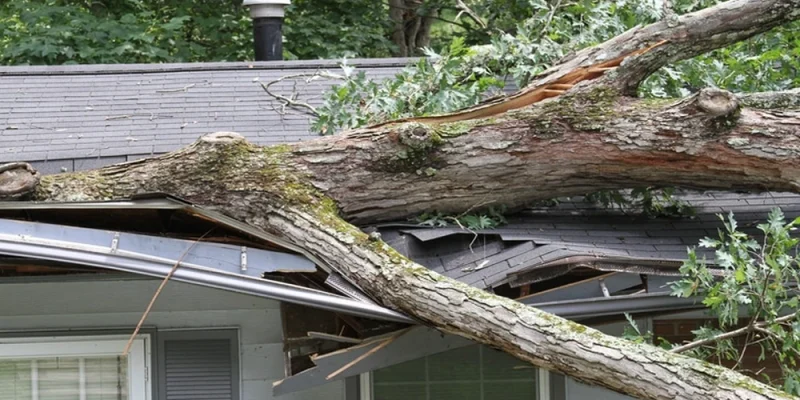
Severe thunderstorm warnings for Cherokee County usually list the same three expected impacts: damage to roofs, siding, and trees. Look back through local storm reports and trees show up far more often than hail. Entry after entry around Canton describes trees or heavy limbs down across roads, yards, and homes, while hail big enough to bruise shingles turns up less often, sometimes with a year or more between notable events.
That difference matters, because the cause of damage shapes everything that follows. It decides where the damage hides, how quickly it becomes a leak, whether insurance is likely to respond, and whether the answer is a patch or a new roof. A roof punctured by a falling oak and a roof slowly baked by twenty Georgia summers can look equally tired from the driveway, yet they lead to very different decisions.
Homeowners who want that sorting done by a long established Roofing Company in Canton often end up with Pritchett Roofing, which earns most of its work through customer referrals rather than door knocking after storms. Estimates are free and professional, the company is fully licensed, bonded, and insured, and it has been a BBB member since 1988 while also belonging to the National Roofing Contractors Association and the Roofing and Sheet Metal Association. Since starting as a one crew outfit in 1981, it has grown past 40 employees and now covers repairs, restoration, maintenance programs, re-roofing, and new roof installation, all backed by extended warranties. After any rough storm season, a smart first move is to ask for an estimate that names the cause of each problem rather than just the price of fixing it.
Here is how the main causes break down, from sudden damage to the slower forces that wear out most roofs.
Trees and Falling Limbs
Lots around Canton, Holly Springs, and Hickory Flat are heavily wooded, and many neighborhoods were built among mature pines and hardwoods. When red clay soil is saturated after days of rain, root systems lose their grip, and tall trees with heavy crowns can go over in a single strong gust. A whole tree can crack rafters outright, but the common damage is smaller: a limb that punches through one shingle, gouges the surface on its way down, or knocks the ridge cap loose. Branches that hang over the roof cause their own slow problem, scraping away granules in one strip every time the wind moves them, so that section ages far faster than the rest of the slope.
Straight Line Wind
Most storm damage here comes from thunderstorm downbursts rather than tornadoes, and local warnings commonly cite gusts around 60 mph. Wind works on edges first, meaning the rakes, eaves, and ridge, where uplift is strongest. Shingles can lift and settle back down looking perfectly normal while the adhesive seal underneath has broken, leaving them loose for the next storm. The clue an inspector looks for is a crease, a faint horizontal line across the tab where it folded backward. Older, brittle roofs and roofs nailed too high lose the most.
Hail
Hail is less frequent near Canton, but when a storm drops it, the damage rarely stops at one house. Each impact knocks granules loose and bruises the mat underneath, exposing asphalt to sunlight, and that damage can take a year or two to show up as visible wear. Shingle choice makes a measurable difference. The Insurance Institute for Business & Home Safety tested 24 impact resistant shingle products in its latest ratings, and while most earned a Good score, none reached Excellent. So “impact resistant” on a label describes a range, not a single standard.
Sun and Summer Heat
This is the cause that retires the most roofs, even though it never appears in a storm report. Long, hot summers slowly drive oils out of asphalt, which makes shingles brittle, speeds up granule loss, and causes edges to curl. South and west facing slopes routinely age faster than north facing slopes on the same house. Color matters too. The EPA’s guidance on cool roofs explains how surfaces with higher solar reflectance stay cooler and send less heat into the building below, which is why reflective shingle colors are worth considering at the next re-roof.
Humidity and Trapped Moisture
Georgia humidity works on a roof from both sides. Outside, shaded slopes stay damp long after rain, which feeds algae and moss and keeps wood trim wet. Inside, warm moist air from bathrooms, kitchens, and laundry rooms rises into the attic. If it cannot escape through proper ventilation, it condenses on the underside of the decking on cooler nights, leading to rusted nail tips, softened plywood, and mildew. It is often mistaken for a roof leak, which sends homeowners chasing shingle repairs for a problem that starts in the attic.
Installation and Ventilation Shortcuts
Some roofs fail early for reasons that trace back to the day they went on. Too few nails, nails driven above the manufacturer’s nailing zone, missing starter strips at the eaves, reused flashing, and soffit vents buried under insulation all shorten a roof’s life. These defects tend to surface as leaks that keep returning to the same spot or shingles that blow off in only moderate wind. Because shingle manufacturers tie warranty coverage to correct installation and ventilation, this cause also affects what a warranty will actually cover.
How the Causes Compare
| Cause | Where it usually shows first | Typical response |
|---|---|---|
| Trees and limbs | Punctures, cracked decking, loose ridge cap, scraped strips under overhanging branches | Targeted repair, decking replacement where punctured, trimming overhangs |
| Straight line wind | Creased or missing tabs along rakes, eaves, and ridge | Spot repair on younger roofs, re-roofing if seals have failed across slopes |
| Hail | Granule bruises spread evenly across whole slopes | Documented inspection, replacement when damage is widespread |
| Sun and heat | Curling, brittleness, and bare spots on south and west slopes | Restoration or maintenance at midlife, replacement near end of life |
| Moisture | Algae streaks, rusty nail tips, damp or soft decking | Ventilation fixes, soft washing, ongoing maintenance |
| Installation shortcuts | Repeat leaks in one spot, early blow offs | Correcting the defect, re-roofing if the problem runs roof wide |
So the answer is yes, at least for sudden damage. Around Canton, trees and wind send more homeowners looking for emergency repairs than hail does. But the forces that decide when most local roofs need replacing are heat and moisture, which never make the news and work on every slope every day.

Comments